

When you think about the parts of a door lock, traditional key-and-knob locks are probably what come to mind first. These locks look simple from the outside, but they are actually far more complex than what meets the eye. Understanding how each component works can help you troubleshoot minor problems, make smarter security decisions, and know when it is time to call a residential locksmith. Below is a detailed breakdown of the anatomy of door locks, from the cylinder to the strike plate, and everything in between.
Common Types of Door Locks
Before diving into individual components, it helps to understand the main lock categories available to homeowners and businesses. Each type balances security, convenience, and cost differently.
Deadbolts vs. Knob Locks
- Deadbolts extend deeper into the door frame and resist forced entry far better than latch-only knobs. They are the standard recommendation for any exterior door.
- Knob or lever locks are appropriate for many interior doors and can serve as secondary hardware on exterior doors, but they should never be used alone on a main entry point.
Smart Locks and Electronic Options
Smart locks layer modern convenience onto solid mechanical hardware and can integrate with your home’s ecosystem. Common features include:
- Remote access via smartphone apps
- Biometric entry on select models (fingerprint)
- Smart home integration with Alexa, Google, and Apple
- Temporary access codes for guests and service professionals
- Activity alerts when doors are locked or unlocked
Smart locks run on batteries and may require occasional troubleshooting, but their convenience and auditability make them strong choices for busy households. If you are considering an upgrade, our guide to high-security locks covers what to look for in modern hardware.
The Anatomy of Door Locks: Traditional and Electronic
Many residential homes, apartments, schools, and commercial buildings still rely on traditional key-and-doorknob locks for both interior and exterior doors. Traditional locks, also known as mechanical locks, remain popular because they are reliable, widely understood, and easy to service. That said, they are not the only option.
Electronic locks use electricity and small motorized components instead of purely mechanical parts. Many modern electronic locks incorporate smart technology, allowing entry via smartphone, keypad code, or voice command without ever needing a physical key. Our locks and security FAQ page covers common questions about both traditional and electronic options.
What Are the Parts of a Door Lock Called?
Understanding the individual components helps you communicate clearly with a locksmith and recognize when something is worn or failing. Here are the most important parts of a door lock:
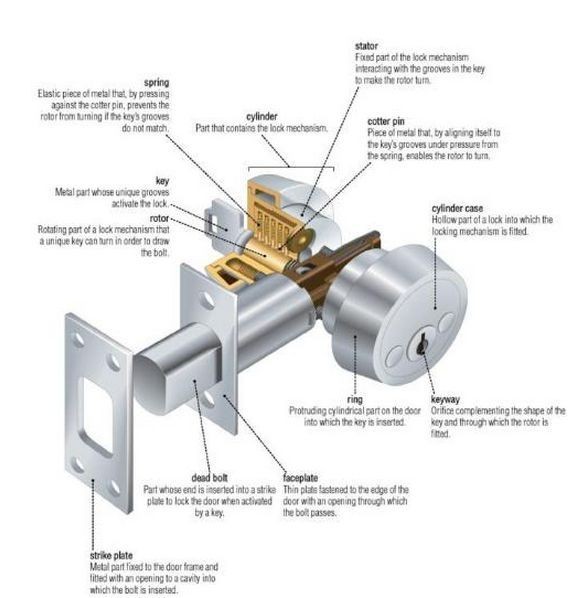
The Cylinder: Also called the lock body, this is the part where the key is inserted. When locked, a series of spring-loaded pins inside the cylinder prevent it from turning. The key lifts these pins to the correct height, allowing the cylinder to rotate and retract the bolt. This is the core of how most traditional locks function.
The Bolt: Also called the latch, the bolt is the piece of metal that extends from the door into the frame to hold the door closed. In a deadbolt, this piece is solid and does not spring back when pressure is applied, which is what makes deadbolts more secure than spring latches.
The Box: The bolt extends into a recessed hole in the door frame called the box. It is shaped to receive the bolt precisely, holding it firmly in place when the door is locked and preventing it from being pulled or pried open from the outside.
Additional Lock Components Worth Knowing
- Strike Plate: The reinforced metal plate mounted on the door frame that the bolt enters when the door closes. A quality strike plate secured with long screws into the wall stud dramatically increases resistance to kick-in attacks.
- Keyway: The shaped slot the key slides into. The specific profile of a keyway helps prevent unauthorized keys from entering and turning the cylinder. Restricted keyways take this further by limiting who can legally duplicate the key.
- Spindle: The rod that connects the interior and exterior knobs or levers to the lock mechanism. Turning the handle rotates the spindle, which retracts the latch bolt.
- Thumb Turn: The interior lever or dial on single-cylinder deadbolts that allows you to lock and unlock the door from inside without a key.
What Are the Parts of a Key Called?
Keys are made up of two primary parts. The first is the bit or blade, the narrow metal section that slides into the keyway. The unique cuts along the blade are designed to align with the specific pin heights inside that lock’s cylinder, allowing it to turn only for the correct key.
The second part is the bow, the wider portion you grip when inserting and turning the key. The bow provides the torque needed to rotate the cylinder and retract the bolt. Together these two parts make each key a precisely engineered security token that controls access to a specific space.
What Are the Parts of a Deadbolt?
Deadbolts are the gold standard for exterior door security. Here are the key components that make them work:
The Bolt: The actual deadbolt is a solid metal bar that extends from the door into the frame. Unlike a spring latch, it does not retract under pressure, which is what gives deadbolts their superior forced-entry resistance.
The Thumb Latch: The interior component you rotate to extend or retract the bolt from inside the home. No key is required from the inside on a single-cylinder deadbolt.
The Turnpiece: Also called the tailpiece, this is the rod that passes through the door connecting the exterior cylinder to the interior thumb latch. Turning the key from outside rotates the cylinder, which turns the tailpiece, which moves the bolt.
The Keyhole: The exterior opening where the key is inserted to operate the lock from outside. The shape of the keyhole matches the keyway profile of the cylinder inside.
If you have questions about which deadbolt is right for your door, our team at Express Locksmith can assess your setup and recommend the right hardware for your security level and budget.
What Is a Door Strike Plate?
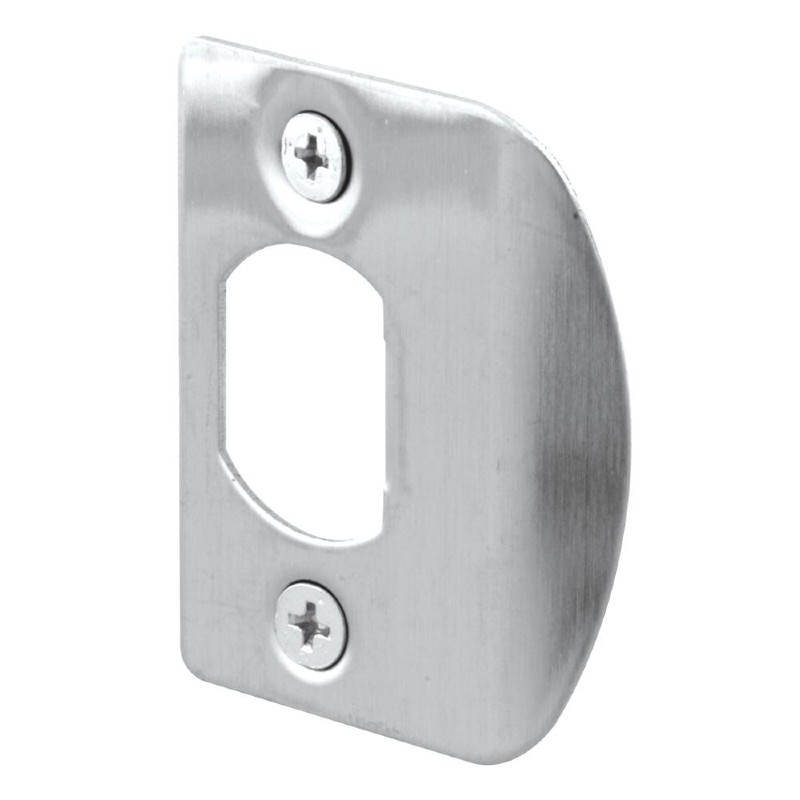
The strike plate is a reinforced metal plate attached to the door jamb. It contains one or more holes that receive the bolt when the door is closed. When the door shuts, the bolt extends into those holes and the strike plate holds everything securely in place.
Beyond holding the bolt, the strike plate protects the surrounding wood of the door jamb from repeated contact with the bolt, reducing wear over time. It also significantly increases security. A standard strike plate with short screws can be kicked out with minimal force. Upgrading to a heavy-duty strike plate secured with 3-inch screws that reach into the wall stud turns your door into a dramatically harder target.
What Is the Plate Behind a Door Knob Called?
There are actually two plates that can appear behind a door knob, and they serve different purposes.
The first is the strike plate, described above, which is mounted on the door frame and receives the latch bolt when the door closes.
The second is the rosette, a decorative and functional plate mounted directly on the door surface behind the knob itself. The rosette holds the doorknob assembly in place, prevents wobbling, and covers the installation hole in the door. It also adds a small but meaningful layer of protection by covering the spindle connection point.
How to Choose the Right Door Lock for Your Home
Match the Lock to the Door’s Risk Level
- Front and back exterior doors: Grade 1 or Grade 2 deadbolt with a reinforced strike plate and 3-inch screws. Consider adding a smart keypad for keyless convenience.
- Side and garage entry doors: Deadbolt plus a knob or lever for everyday use. Do not skip the deadbolt on these doors.
- Interior and privacy doors: Knob or lever locks are typically sufficient. Bedroom and bathroom doors rarely need more than a privacy latch.
Understand ANSI/BHMA Grade Ratings
Lock grades are standardized by the American National Standards Institute. Knowing the grades helps you compare hardware on a level playing field:
- Grade 1: Highest security for residential and commercial use. Tested to withstand the most force and wear cycles.
- Grade 2: Strong residential choice and a solid all-around option for most homes.
- Grade 3: Basic security for low-risk interior applications. Not recommended for exterior use.
Key vs. Keyless: What Works for You
- Prefer traditional keys? A reliable single-cylinder deadbolt from a reputable brand is hard to beat for simplicity and longevity.
- Want to eliminate keys entirely? A smart lock with keypad or fingerprint reader offers convenience without sacrificing core security, provided you choose a quality brand and keep the firmware updated.
For businesses managing access across multiple doors or employees, a master key system or restricted keyway system may be the smarter long-term investment.
Deadbolt vs. Knob/Lever vs. Smart Lock at a Glance
| Lock Type | Security Level | Convenience | Best Use | Key Notes |
|---|---|---|---|---|
| Deadbolt | High | Moderate (key or thumb turn) | All exterior doors | Choose Grade 1 or 2; pair with reinforced strike plate |
| Knob/Lever | Low to Medium | High | Interior doors; secondary exterior hardware | Never use alone on an exterior door |
| Smart Lock | Medium to High | Very High (codes, app, biometric) | Busy households, rentals, guest access | Monitor battery life; choose reputable brands |
Tips for Maintaining the Parts of a Door Lock
Even high-quality locks need occasional maintenance to perform reliably. Here is what to do on a regular basis:
- Use graphite or silicone-based lubricant on all moving parts. Avoid oil-based lubricants that attract dirt and gum up over time.
- Tighten loose screws on knobs, levers, and strike plates. Loose hardware makes locks easier to defeat and accelerates wear.
- Inspect and reinforce strike plates annually. Replace short screws with 3-inch versions that anchor into the wall stud.
- Clean the keyway with compressed air to remove debris. Never force a key that is sticking.
- Replace worn keys before they become so degraded they damage the cylinder pins.
- If a lock feels stiff, grinds, or is slow to operate, call a mobile locksmith before it fails completely during a lockout.
When to Rekey vs. Replace Your Locks
Knowing the parts of a door lock also helps you make smarter decisions when security changes are needed.
Rekey when the lock hardware is in good condition but you want to invalidate old keys. Moving into a new home, losing a key, or ending a rental relationship are all good reasons to rekey your locks. Rekeying changes the internal pin configuration so only new keys will work. It costs less than replacing the entire lockset and achieves the same security result.
Replace when the hardware itself is worn, damaged, low quality, or no longer meets your security needs. If the cylinder spins loosely, the bolt is misaligned, or you are upgrading to a higher security grade, full lock replacement is the right call. Our team can assess whether rekeying or replacing makes more sense for your specific situation.
Contact Us to Learn More About the Parts of a Door Lock
If you would like to learn more about your locks, need help choosing the right hardware, or want a professional to assess your home or business security, contact Express Locksmith today. Our licensed and insured team serves Houston, TX 24 hours a day and is always ready to answer your questions about the anatomy of door locks and how to keep your property secure.
Frequently Asked Questions About the Parts of a Door Lock
What is the most secure lock for a front door?
A Grade 1 deadbolt with a reinforced strike plate secured by 3-inch screws into the wall stud provides excellent resistance to forced entry. Pairing it with a smart keypad adds convenience without giving up security. Our team can help you choose and install the right option from our high-security lock lineup.
Are smart locks safe?
Quality smart locks are as secure as their mechanical cores. Choose reputable brands, keep firmware updated, use strong access codes, and maintain fresh batteries. Models with tamper alerts and activity logs add an extra layer of awareness.
Do I need both a knob lock and a deadbolt?
Yes, on exterior doors. The knob or lever handles everyday latching while the deadbolt provides real resistance against kick-ins and prying. Using only a knob lock on a main entry door is a significant security gap.
How often should I maintain my locks?
Light maintenance every 6 to 12 months, including lubrication, screw tightening, and keyway cleaning, keeps locks operating smoothly and extends their lifespan considerably.
What is the difference between a single and double cylinder deadbolt?
A single-cylinder deadbolt uses a key on the outside and a thumb turn on the inside, making egress fast and easy. A double-cylinder requires a key on both sides, which improves security on doors with nearby glass panels but can slow emergency exits. Consider your specific door situation before choosing double-cylinder hardware.
Can a locksmith replace just part of a lock or does the whole thing need to be changed?
In many cases, individual components like the cylinder, strike plate, or bolt can be replaced without swapping the entire lockset. A professional assessment from an emergency locksmith or residential locksmith will tell you exactly what is needed and what the most cost-effective solution is.