

Restricted Keyway Master Systems in Houston, TX
Restricted keyway master systems in Houston, TX combine controlled key duplication with tiered access across multiple doors. A restricted keyway helps limit who can make additional keys, while a master key hierarchy determines which doors each authorized key can open.
Express Locksmith designs and installs these systems for property managers, offices, warehouses, medical facilities, apartment communities, and other organizations that need better accountability than standard keys provide. For a broader overview of available home, business, vehicle, and emergency solutions, explore our locksmith services in Houston.
What Is a Restricted Keyway?
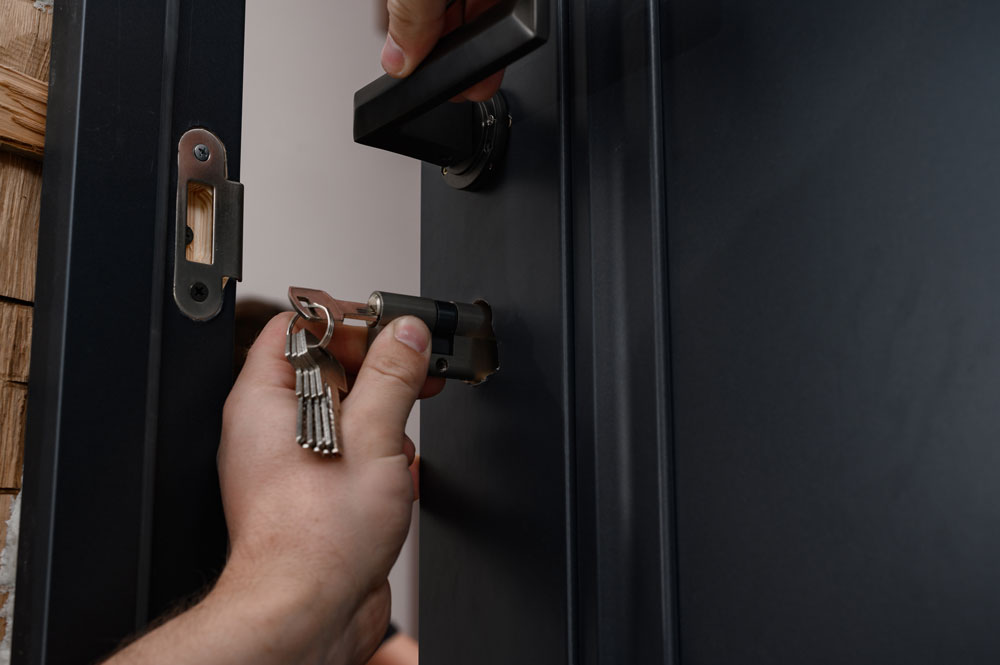
A restricted keyway is a lock-and-key format designed to control duplication more tightly than an ordinary residential or commercial key. Instead of taking the key to any kiosk or hardware counter, additional copies generally require an authorized source and an approved request.
Why Restricted Keys Matter
- Duplication control: Helps prevent casual or unauthorized copying
- Key accountability: Makes it easier to track who receives approved keys
- Turnover management: Supports clearer procedures when employees, tenants, or vendors leave
- Reduced access uncertainty: Limits the number of unknown copies in circulation
Businesses interested in a dedicated restricted-key platform can review our InstaKey security systems in Houston.
What Is a Master Key System?
A master key system is a planned hierarchy that gives different keys different access levels. Individual users may receive keys that open one office, suite, or department, while managers or owners receive higher-level keys that operate broader groups of locks.
Change Key
A change key usually opens one lock or a limited group assigned to a specific employee, tenant, office, or operational role.
Master Key
A master key opens a defined group of locks, such as all doors within one department, suite, floor, or managed property.
Grand Master Key
A grand master key can open multiple master-key groups across a larger building, campus, or portfolio when the hierarchy is designed to support it.
For system design, compatibility, documentation, and installation details, review our master key systems in Houston.
How Restricted Keyways and Master Keys Work Together
A master key hierarchy controls where each key can be used. A restricted keyway controls how additional keys can be obtained. Combining them gives an organization both role-based access and stronger duplication oversight.
| Security Need | Master Key Function | Restricted Keyway Function |
|---|---|---|
| Different users need different doors | Creates tiered access levels | Controls how authorized copies are issued |
| Managers need broad access | Allows approved master-level keys | Helps protect duplication of high-level keys |
| Turnover creates missing-key risk | Affected groups can be identified within the hierarchy | Reduces casual copies outside the approved process |
| A property is expanding | Can reserve hierarchy capacity for future doors | Maintains consistent key-control procedures as the site grows |
Neither feature replaces good administration. Key issuance records, prompt reporting of missing keys, limited master-level access, and documented rekeying procedures remain essential.
Restricted Keyway Master Systems vs. Other Lock Options
Keyed-Alike Locks
Keyed-alike locks use one key across every compatible lock in the group. This is convenient, but every keyholder receives the same level of access. It does not create role-based boundaries.
Standard Master Key Systems
A standard master key hierarchy can organize access effectively, but ordinary keys may still be easy to duplicate unless the selected keyway includes meaningful restrictions.
High-Security Locks
High-security locks may combine restricted keyways with stronger resistance to picking, drilling, manipulation, and forced entry. Review our high-security locks in Houston for the physical-hardware side of the decision.
Electronic Access Control
Electronic systems can provide credentials, schedules, and activity records. Mechanical restricted systems may still serve as the primary solution or as a dependable backup for selected doors.
Properties That Benefit From Restricted Master Keying
- Apartment communities and multi-tenant buildings
- Property-management portfolios
- Offices with departments or restricted rooms
- Medical, dental, and professional facilities
- Warehouses, distribution centers, and storage properties
- Retail stores with stockrooms, cash areas, and management offices
- Schools, training centers, and nonprofit facilities
- Sites with frequent employee, tenant, contractor, or vendor turnover
The strongest fit is a property with multiple doors, multiple user roles, and a meaningful concern about unauthorized copies. A small office where every user needs access to every door may not require a complex hierarchy.

How We Design and Install a Restricted Master Key System
- Map the doors: Identify exterior doors, tenant suites, offices, storage areas, utility rooms, equipment spaces, and restricted areas.
- Define access roles: List owners, managers, employees, tenants, vendors, maintenance teams, and other authorized users.
- Assign door permissions: Decide which user groups need access to which openings.
- Inspect current hardware: Review brands, cylinders, keyways, lock condition, traffic level, and compatibility.
- Select the restricted platform: Compare authorization procedures, key availability, expansion needs, and hardware options.
- Create the hierarchy: Establish change-key, master-key, and higher-level groups while preserving room for future growth.
- Install and test: Rekey or replace compatible cylinders, issue approved keys, and test every access level.
- Document the system: Maintain confidential records showing which keys operate which doors.
Our commercial locksmith in Houston can evaluate broader lock, door-hardware, rekeying, and business-access concerns during the same planning process.
When Rekeying Is Still Necessary
Restricted keys reduce unauthorized duplication, but they do not automatically cancel a key that is lost, stolen, or not returned. A working key remains an access credential until the affected locks are rekeyed, replaced, or otherwise updated.
Consider Rekeying After:
- A master-level or change key is lost
- An employee or tenant leaves without returning keys
- A contractor or vendor no longer requires access
- Management responsibilities change
- Unauthorized use or attempted entry is suspected
- The property changes ownership or management
Our lock change and rekey options explain when compatible hardware can be retained and when replacement makes more sense.
For a practical cost comparison, review our article about whether it is cheaper to rekey or replace master-keyed locks.
Key-Control Practices That Support the System
- Limit master-level keys to users with a genuine operational need
- Require written or documented authorization for additional keys
- Record key numbers, recipients, issue dates, and return dates
- Store unissued and high-level keys in a controlled location
- Review access during employee, tenant, vendor, and management changes
- Report missing keys immediately rather than waiting for a security incident
- Keep door schedules and hierarchy documents confidential
- Plan expansion before adding unrelated cylinders or keyways
Property managers can also review our guide to master key systems for managed properties.
For general lock-grade and door-hardware standards, review resources from the Builders Hardware Manufacturers Association.
Questions to Ask Before Choosing a System
- How many doors and distinct access groups must be managed?
- Which users need individual, departmental, or building-wide access?
- How are duplicate keys authorized and recorded?
- What happens when a restricted or master-level key is lost?
- Can the system expand as the property changes?
- Are replacement blanks and authorized service available long term?
- Do any doors require stronger physical-security hardware?
- Can existing cylinders be reused, or should they be replaced?
Restricted Keyway Master System FAQs
What is a restricted keyway master system?
Is a restricted keyway the same as a high-security lock?
Can existing locks be converted to a restricted master key system?
Can one master key open every door?
What happens if a master key is lost?
Can restricted keys still be copied?
Is a restricted master key system suitable for a small business?
Get Help Planning Commercial Key Control
Call Express Locksmith at 832-690-1640 and describe the property, number of doors, user roles, current locks, and duplication concerns. We will explain the most practical next step.