

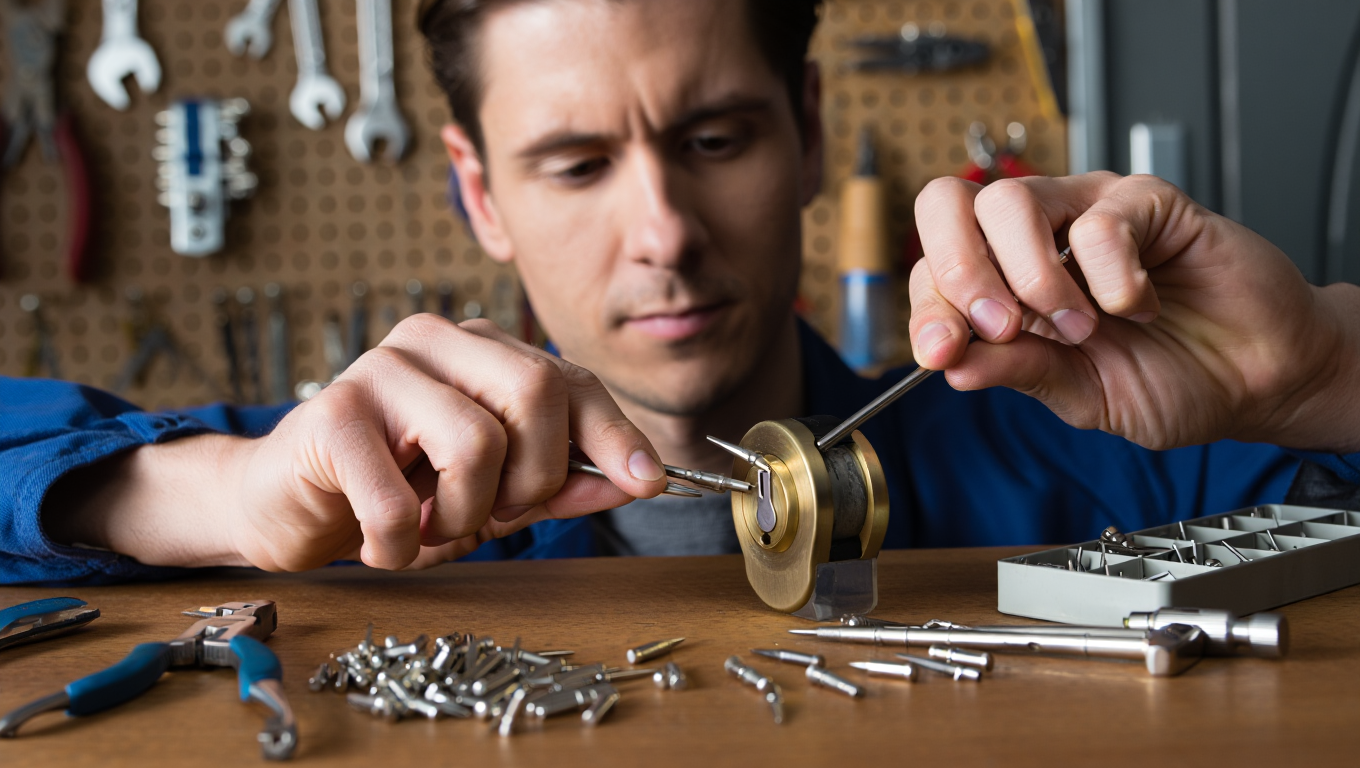
Changing the security of a door lock does not always require replacing the entire lock hardware. Many homeowners ask can you rekey a lock without the original key after losing a key or moving into a new property. Rekeying allows a locksmith to modify the internal pins of a lock so that it works with a completely different key while keeping the same lock hardware installed on the door.
Technicians who provide lock change and rekey lock services can usually reconfigure most residential locks quickly using specialized tools and replacement pins.
What Does Rekeying a Lock Mean?
Rekeying a lock involves altering the internal pin configuration inside the lock cylinder. Each key is cut with specific grooves that correspond to a unique arrangement of pins inside the lock.
When the correct key is inserted, the pins align along a line called the shear line, allowing the cylinder to rotate and open the door.
During the rekeying process, a locksmith replaces the pins inside the cylinder so that the old key no longer works and a new key becomes the only key that can operate the lock.
This allows the homeowner to maintain the existing lock while eliminating access for anyone who previously had a copy of the key.
Why Rekeying Is Often Better Than Replacing Locks
Rekeying is often more affordable than replacing the entire lock because it only involves modifying the internal components of the existing lock.
Advantages of rekeying include:
- Lower cost compared to full lock replacement
- Improved security after losing keys
- Maintaining existing hardware and door appearance
- Ability to match multiple locks to one key
Many homeowners rely on experienced residential locksmith technicians to perform rekeying services when moving into a new home.
Can You Rekey a Lock Without the Original Key?
Yes, a locksmith can usually rekey a lock even if the original key is missing. However, the process may involve additional steps compared to standard rekeying.
When the original key is available, the locksmith can simply remove the lock cylinder and change the pins. Without the original key, the technician must first open the lock or disassemble it to access the cylinder.
This may involve using specialized tools or techniques to safely remove the lock core.
How Locksmiths Rekey Locks Without the Original Key
Professional locksmiths use several methods to rekey a lock when the original key is unavailable.
These methods may include:
- Picking the lock to gain access to the cylinder
- Removing the lock cylinder from the door
- Disassembling the lock to replace the pins
- Creating a new key that matches the updated pin configuration
Once the lock is opened and the cylinder is accessible, the locksmith replaces the internal pins so that the lock operates with a new key.
Situations Where Rekeying Is Recommended
Rekeying is commonly recommended in several situations where security may be compromised.
Examples include:
- Moving into a new home
- Losing house keys
- Tenant turnover in rental properties
- After a security incident
- When multiple people previously had access to the property
In these cases, rekeying ensures that old keys will no longer open the door.
Many homeowners learn about security improvements by reviewing information on when it is time to rekey your home locks.
Can All Locks Be Rekeyed?
Most standard residential locks can be rekeyed, but there are exceptions. Some specialized locks may require replacement instead of rekeying.
Locks that may not be easily rekeyed include:
- Certain electronic locks
- Integrated smart lock systems
- Very old or damaged lock hardware
In these situations, a locksmith may recommend replacing the lock instead of rekeying it.
Rekeying Multiple Locks to One Key
One advantage of rekeying is that multiple locks can be configured to operate with the same key.
This is especially helpful for homeowners who want to simplify access around the house.
For example, the front door, back door, and garage entry door can all be rekeyed so that one key opens each lock.
Some homeowners also upgrade security while rekeying by exploring solutions such as modern smart lock technology.
How Long Does Rekeying Take?
In most cases, rekeying a single lock takes only a short amount of time when performed by a professional locksmith.
The exact time required depends on factors such as:
- The number of locks being rekeyed
- The type of lock hardware
- Whether the original key is available
- The condition of the lock
Most residential rekeying services can be completed within a single visit.
Frequently Asked Questions
Can a locksmith rekey a lock if I lost the key?
Yes. Locksmiths can usually rekey a lock even when the original key is missing by accessing and modifying the lock cylinder.
Is rekeying cheaper than replacing locks?
In many cases yes. Rekeying changes the internal pins of the lock while keeping the existing hardware.
How many locks can be rekeyed to the same key?
Multiple locks can often be rekeyed to work with a single key depending on the lock type.
Should I rekey locks after moving into a house?
Yes. Rekeying ensures that previous owners or tenants cannot access the property using old keys.
Can smart locks be rekeyed?
Some smart locks allow rekeying while others rely on electronic credentials rather than traditional keys.
Conclusion
Rekeying a lock is a practical and affordable way to improve home security without replacing the entire lock system. Even if the original key is missing, a professional locksmith can usually modify the lock so that it works with a new key.
If you need help rekeying locks or improving your home security, you can contact a Houston locksmith technician or explore available locksmith services in Houston.
For additional guidance on residential security improvements, the Cybersecurity and Infrastructure Security Agency physical security guidance provides helpful information about protecting homes and property.